N.B.: 'fantastic' is an extreme adjective - 'absolutely' is OK.
Homework and Vocabulary
We reviewed your homework from the last class (you might not have known about it if you didn't remember to check the blog for your homework) and you had the vocabulary quiz you begged me for and which I begrudgingly promised to give you.
Practice exam
Today you did part of a practice exam, more specifically the Reading & Use of English sections. Next week we'll continue with it.
Review this Quizlet list , which has vocabulary from the story you have for homework (below).
Read 'Sleeping', by Katharine Weber, which I gave to you in class. If you missed class, you can also read it at CommonLit. Answer the questions on the back of the paper.
We talked about how you will be doing parts of the next practice exam over the next couple of weeks depending on your attendance and other factors. You might want to bring a snack to eat during our break time for the next few classes if you think that will help you.
We also quickly reviewed your homework. You can find the answers to p.36 ex1 in this Quizlet list. I also encourage you to study this list if you need to. The answers for p.36 ex3 are: a) totally, b) extremely, c) absolutely, d) quite, e) very.
I also returned your texts about the photos from 2016, which I really enjoyed! I was not able to finish marking your essays and will return them to you next week.
¿De qué estarán riendo? - translate into English
Speculating or making a supposition
The last time we looked at some photographs, we more or less knew what was happening in them. But often on the First Certificate (and in life) you often have to guess what his happening.
We looked at some ways to do this and considered the following from Spanish grammar:
Especulación o suposición sobre un hecho en el presente:
Tendrá muchos deberes, será por eso que está tan estresada.
Debe tener muchos deberes...
Es posible que tiene muchos deberes...
We translated these three sentences into English using the modal verbs 'must' and 'might'. We also talked about similar forms such as:
modal + V (e.g. 'She might have a problem')
modal + be + adjective (e.g. 'She might be upset because ...')
modal + be + V-ing (e.g. 'She might be sleeping now')
What about when we want to speculate about what happened, i.e. the past?
Especulación o suposición sobre un hecho en el pasado:
Habrá tenido una avería, por eso no ha llegado.
Debió tener una avería...
Es posible que tuviera una avería...
We also translated these into English (using 'must have' and 'might have') and
We also considered how to pronounce them in reduced forms:
must have -> must've -> 'musta' (must of)
might have ->
could have ->
must be ->
might be ->
Finally, we also used the Grammar section on p.96 in your book to work on the grammar for this a bit more and used the images on p.123 for Speaking part 2 practice.
Whodunnit
On the piece of paper I gave you, write short answers to these three questions:
What did you do on Saturday night?
What is one of your favorite books or films?
What was the last thing you ate before now?
I'll explain what to do after this. Pay attention to your pronunciation - practice using reduced forms.
John Lewis Christmas ad
First, some vocabulary for talking about the video:
I'll explain what we're going to do with this - just putting the links here so we can find them easily.
Last week we agreed that today we would start a practice test. In the end, what we did today is a writing task (more specifically, an essay, which is required in part 1 of all FCE exams).
You've all done a lot of essay writing at school and in your English classes. Nevertheless, we reviewed the basic structure of an FCE-style essay and how to prepare for writing one using pp.30-1 of your book.
Then we reviewed the question you wrote about (p.44 of this pdf) and you planned your response. You compared your plans with each other and then wrote your essays.
After reviewing one of the sample essays written for the same question as you wrote about ('Teenagers are too young to teach other people about anything'. 1. Technology, 2. The environment, 3. Your own idea), you exchanged essays and gave feedback and marks to each other.
I will also read and mark your papers. The marks you get will count towards the mock exam we'll be doing over the next few weeks.
We ended class with a couple of songs in Lyricstraining.
Today you wrote to each other about your holidays and the contact you had with English.
We then looked ahead to what's coming up this term. In the next few weeks, we'll be doing another practice exam. We'll do part of it in the next class (Class 12, 18 January) and then the rest on a date that works best for the majority, keeping in mind retreats, exams, trips, etc. It will be one of the following.
25 January
1 February
8 February
Photographs
We did an activity based on this photo listening to what the photographer said about it in this audio. Some vocabulary that came up form this was:
We talked about why each one could be considered influential and then you wrote short texts explaining which of the six you think is the most influential. You also commented on your classmates' choices in writing.
Textbook
After the break, we did a quick review of Unit 2 and corrected it.
Homework
You have a choice - choose only 1 or 2 (don't do both).
Choose one of the images from Time Magazine's 10 Best Photos of 2016. Which one would say is the most important or influential? Why? Explain why and what you think about the photograph in 75-150 words. You don't need to describe it - explain why it is significant.
What image of yours from 2016 is the most meaningful for you? Why? Explain the story behind it and what it means to you. Print a copy of your picture with a 75-150 word text explaining it.
Today we reviewed your homework and then talked about the importance of maintaining contact with English over the holidays.
Films, videos and music are great ways to do this. Many of you have told me you've watched some episodes of The Walking Dead after the activity we did in class 8, for example, but anything you're interested in watching is going to be helpful. My favorite series as of late is Stranger Things - if you don't know what else to watch, check it out!
If you enjoyed the game we did in Class 8 (50 Ways to Be Killed by Zombies), then you could play that one and that would be great contact with English as well. Or see the list of Interactive fiction games I posted below for other games, many of which are a bit less gory.
Maintain contact with English. Write three short texts about three different times you had contact with English (see example below), or, if you didn't have contact with English, just write three short texts where you explain to me something you did that day.
Example
I watched Captain Fantastic, a film about a father and his children who live in the wilderness. Years earlier, the father and his wife decided to take their kids to bring them up in the wilderness. The kids were educated with the books they had in their library, but they also learned how to live in the forest as well as lots of practical physical skills such as hunting, rock climbing, etc. After a short time, we learn that the children's mother, who has been in a hospital, has died, and they want to go to her funeral. The father is reluctant to go because he knows his wife's parents are going to make things difficult for them, but the kids insist and they go. The biggest part of the movie is about the adventures they have and what happens when these kids experience the 'normal' world that the rest of us live in. Will they stay with their grandparents? Will their father be arrested for child abuse? Can these kids adapt to the life that the rest of us lead? Watch the film and find out.
I asked you about the kind of contact you had over the long weekend and you discussed this in small groups, also thinking ahead to the winter holidays, when you'll have another long break but should not let up on your contact with English.
Vocabulary/pronunciation, Use of English and more
Among other things, we reviewed some vocabulary from Unit 2 (pp.21-24) using letters and a phonemic chart.
We also did the Use of English exercises (on part 2) on p.28 and practice for Speaking part 2 on p.27.
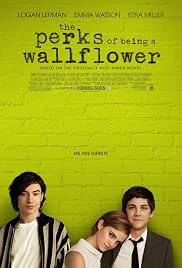
Preparation for The Perks of Being a Wallflower
Over the next couple of classes, we are going to watch an American film from 2012 called The Perks of Being a Wallflower. To begin, I gave you a handout with:
information about the film
an introduction to the story
an explanation of the title
teasers about two scenes in the first half that help understand the story
Homework
Write a short text (approx 100 words, or more is OK) about the film. You can either
1) write a reaction to the film, that is, describe what you thought about something you saw in it or
2) write a summary of what happened in the part we saw in class today.
Today I got the following response from Michael Lewin. Thanks to all of you who wrote comments for him!
Hi Kirk,
Thank you for writing to me and telling me a bit about how The Hand That Feeds Me is being used. And special thanks to the five students who've posted their comments - in English! - on the blog. I'm delighted that they like the story and it's interesting that it seems to have worked in different ways for each of them. Not much more to say, but thanks to you all.
Mike Lewin